How do careers in the financial sector evolve?
The financial sector never stands still
New regulations, digitalisation, changing business models and evolving expectations from professionals not only affect organisations, but also the way careers are built.
Where careers once often followed a fairly predictable path, we now see much more variety. Professionals move between roles, build expertise across different areas and increasingly make a conscious choice for temporary projects or consultancy.
What does this mean for your career? And how can you prepare for a job market that is constantly evolving?
Careers are becoming less linear
For many professionals, the traditional career path used to look more or less the same: start in a junior role, progress to a senior position and eventually move into management.
Today, there are many more possibilities. A professional may, for example, make a lateral move into another role, transition from finance to risk, or further specialise within compliance.
Temporary projects and consultancy are also increasingly becoming part of a career. As a result, a career is less of a straight line and more of a collection of experiences that together shape a professional profile.
Specialisation is becoming increasingly important
Financial services are becoming more complex. Areas such as risk management, compliance, data & reporting and actuarial science require increasingly in-depth expertise.
For professionals, this means that specialisation can be highly valuable. Building specific expertise that is difficult to find on the job market can significantly strengthen your position.
At the same time, it is important not to focus solely on your own area of expertise. A specialist who understands how their domain fits into the broader organisational context often has a stronger profile than someone who looks at challenges exclusively from one specialist perspective.
Consultancy and project work as an alternative
Project-based work is a deliberate career choice for many experienced professionals today. It offers the opportunity to work with different organisations and challenges while applying your expertise in a variety of contexts.
For some, it is a temporary phase between two permanent jobs. For others, consultancy becomes a fully fledged career path.
Its appeal often lies in the combination of variety, autonomy and the opportunity to build new experience relatively quickly.
Technology is changing the content of roles
Digitalisation has a major impact on finance jobs. Repetitive processes are increasingly being automated and data play a growing role in analysis and decision-making.
This does not necessarily mean that certain jobs will disappear. Many roles are primarily changing in content. Where professionals once spent more time on operational tasks, the focus is increasingly shifting towards interpretation, advice and strategic thinking.
Those who want to keep evolving should therefore not only keep their professional knowledge up to date, but also become familiar with new technologies and ways of working.
Soft skills are becoming increasingly important
Technical expertise remains essential, but it is increasingly combined with strong interpersonal skills.
Communication, stakeholder management, problem-solving and adaptability are becoming more important as professionals collaborate across different departments and areas of expertise.
The strongest profiles are therefore not necessarily those with the most technical knowledge, but those who are also able to translate their expertise into clear advice and practical solutions.
Greater focus on flexibility and balance
Career decisions are no longer determined solely by job content and salary. The way someone wants to work is playing an increasingly important role.
Flexibility, remote working, autonomy and work-life balance can, for example, be decisive when choosing between a permanent role, consultancy or another career path.
These preferences can also change over time. What someone considers important at the beginning of their career may no longer have the same priority when their professional or personal situation changes.
What does this mean for your career?
A changing job market mainly requires you to take a conscious approach to your career. Continue developing your knowledge and keep track of developments within your field. At the same time, regularly reflect on the direction in which you want to evolve and how your profile is valued in the market.
Flexibility is just as important. You do not need to pursue every opportunity, but it can be useful to explore the options available from time to time.
A successful career today is increasingly less about following a predefined path. Instead, it is about making a series of conscious choices in which you continuously align your experience, expertise and personal ambitions.
Ready to think about your next career move?
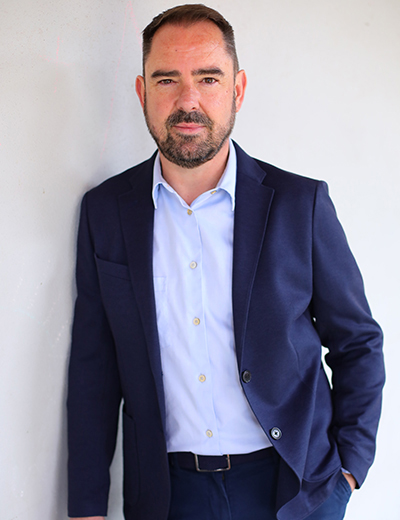
Bart Bernaerts
Managing partner
Looking for a new job?
We offer jobs in areas such as management, banking, insurance, finance, accounting, legal, compliance, actuarial science, risk, and much more…
View all our articles
- Discreetly looking for a new job: how do you go about it?
- Frequently asked interview questions
- How do careers in the financial sector evolve?
- How do you determine and negotiate your market value?
- Job interview: preparation, questions and tips
- Permanent job or consultancy: which suits your career?
- Soft skills vs. technical skills: what makes the difference in today’s financial sector?
- Tips for a strong CV
- When is it time for a career change?
- Working with a recruiter: how can you get the most out of it?